




Sample Reports
I value my client's privacy, and I certainly hope you have the opportunity to experience this by utilizing my services. As a professional I also have a responsibility to provide some level of privacy to all parties in the real estate transaction. Whether or not you purchase the property I inspect, the privacy of the owner or final purchaser must be maintained. After all, how would you like to purchase a home just to have that report, with all types of revealing photographs and information, readily available for anyone to see? As such I do not provide sample reports freely available to download from my WEB site. Instead, if you are interested in utilizing my services please call me so that we can discuss your needs. At that time I can provide you with a sample report from an actual inspection performed so that you can compare it with those that other Inspectors offer.
Many Inspectors will create sample reports for you to view. These are generally the worst of the worst collections put together as if it was one home. Instead for your benefit I have posted here various items found during typical inspections. These will include the actual photographs and descriptions of what was found, as well as a small description of the written report. After these samples is a description of what to expect in your report.
Sample 1 - Do you know what is in your attic?
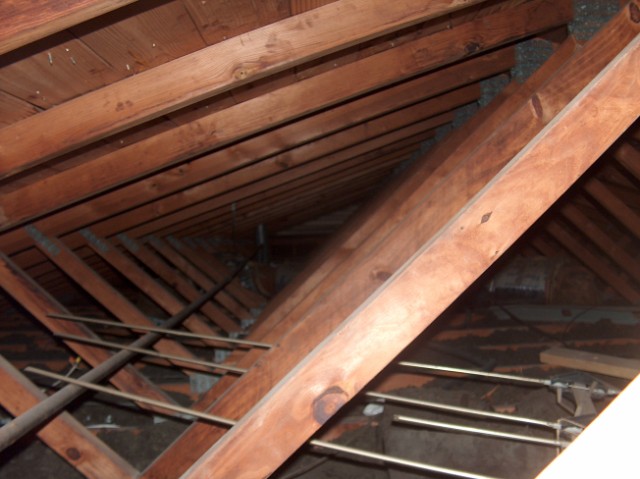
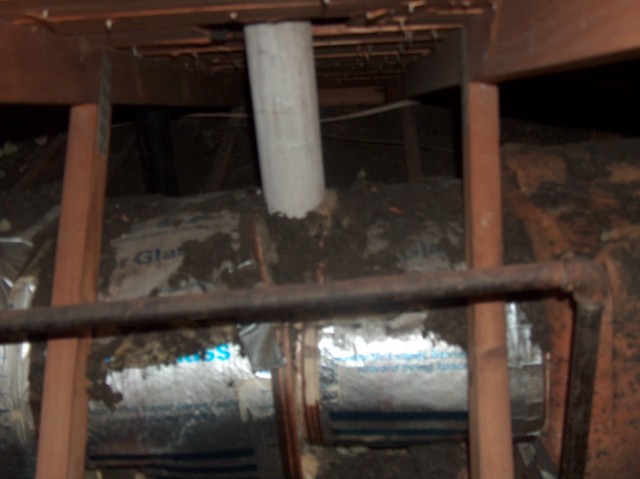
Picture 1 Picture 2
The first issue listed is quite interesting and actually demonstrates the privacy issues I described above, and how a breach of privacy can happen completely and unexpectedly. I was giving a presentation to a group of buyers to help them identify major issues before they make an offer on a property. I used pictures from a home I recently inspected that had so many major issues it was a great example to use. During the presentation I heard from the darkened room "Hey, that's the house we just sold!". Obviously the presentation was stopped until I spoke with them and they approved continuing use of the home. They also approached me after the presentation and told me that after my client walked away, the next buyer's Inspector did not write up half the items I found, including this major issue!!
Picture 1 is a photograph of the attic area from the entry hatch. If you follow the black gas pipe, on the left, it goes to the far end of the attic where the issue was found. You can obviously see the ceiling joists and tell that this attic is accessible from one end to the other for a proper inspection. Apparently the final buyer's Inspector did not walk the attic (found some excuse not to) because if he/she did they would have found the issue in picture 2. I was astounded when I saw what appears to be an old transite asbestos flue pipe, for the water heater below, running through the heating and air conditioning ductwork!! That is most obviously near the original installation of these systems as evidenced by the totally decaying/rusting plenum where the duct is entering it, at the right of the picture. HOW COULD THIS NOT HAVE BEEN CAUGHT IF THE ATTIC WAS PROPERLY INSPECTED??
Sample 2 - Do you know what lurks under your house?
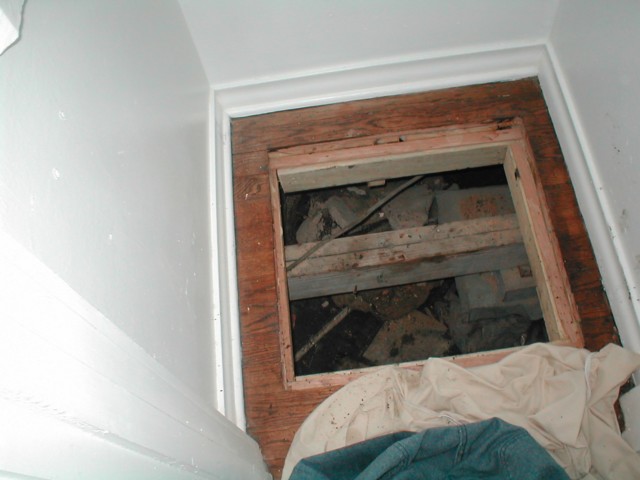
Picture 1 Picture 2
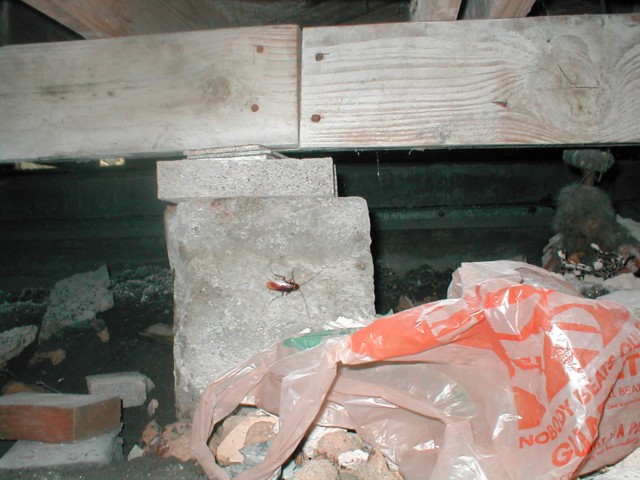
Picture 3 Picture 4
The scene in picture 1 is a concern for Inspectors as the crawlspace access hatch is blocked with debris and a pair of floor joists significantly reducing the access opening size. Many Inspectors will defer to their Standards of Practice (SOP, either State mandated or Association mandated) and declare the crawlspace inaccessible and/or unsafe to enter. By the way, the floor joists had also been cut part way through to make the opening.
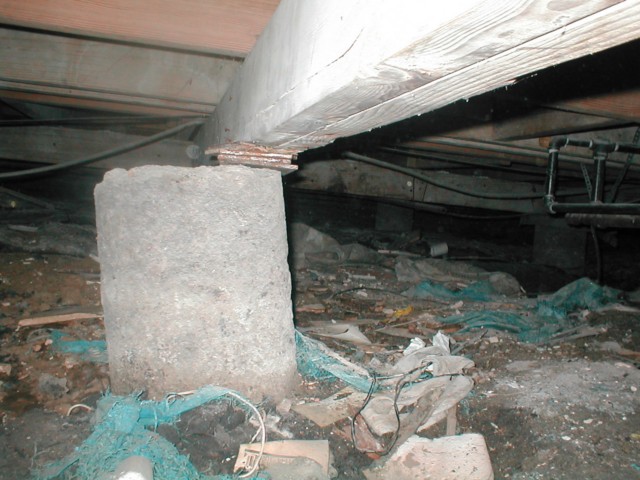
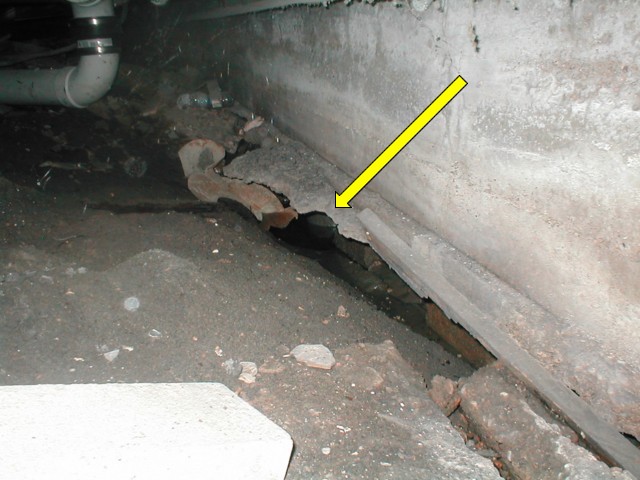
Pictures 2 and 3 display many issues of which the extensive debris under the foundation was only one, but the one of importance to this example. The amount of debris under this foundation was simply staggering!! The crawlspace alone took all of over an hour to navigate and document the conditions. A great deal of that time was spent avoiding and moving debris to see issues being covered by it.
Besides all of the other issues found, picture 4 was a significant find which would not have occurred if the effort was not made to inspect this crawlspace. This photograph was taken in a difficult to reach area and displays an incomplete, recent piering job. At this point on the outside of the home were numerous movement indicators, and a load of beautiful mulch against the home that was already sinking. This interior view shows one of the piers without proper backfill and compaction having been flooded out.
Sample 3 - Are roofs just for birds to sit on?
Picture 1 Picture 2
Picture 3
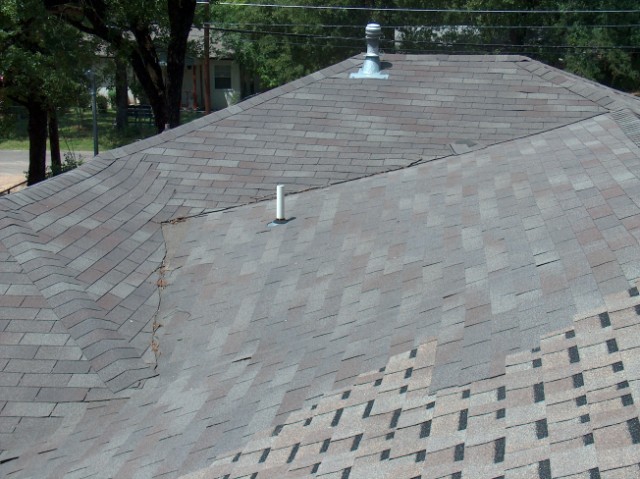
Roof issues can create havoc with hidden water penetration occurring for long periods of time. Every roof that can be safely walked should be as many issues just are not visible from the ground or even at the eaves with a ladder. Unfortunately many roofs go unwalked either by choice of the Inspector to reduce their inspection time, or fear of walking a roof.
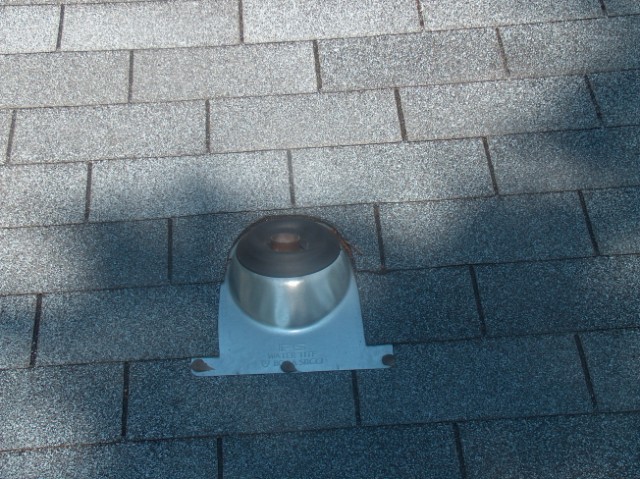
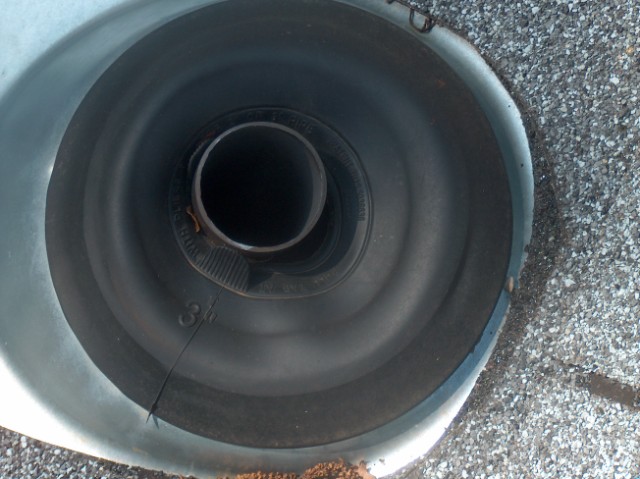
Picture 1 and 2 come from the same roof. It was obvious from the ground that the vent pipe had been cut to short as displayed in picture 1. However, the vent in picture 2 was not visible from the ground due to trees and other obstructions. The boot for this vent had been installed upside down (as opposed to picture 1) and does nothing but collect water and leak into the home.
Picture 3 displays many issues that were found in a hidden valley, not visible from the ground or from the eaves with a ladder. Climbing and walking this roof found; improper flashings in valleys and vent pipes, missing shingles. damaged shingles, water blockage points, etc.
How is your report constructed?
You have contracted with me to inspect a property so that you can learn as much about the property as possible before purchasing it. Creating a proper report that is thorough and complete takes time and resources. A useful and proper report just can not be created on site! On site report generation places all homes in the "Cookie Cutter" inspection mentality. The truth is that no two different property's issues are the same, and for an Inspector to assume this leads to trouble for their client. When your inspection and review is finished the field notes and photographs are taken back to my office for a complete review and report generation. It is my goal to ensure your report leaves no questions for you to ask. As a result your report will be thorough and detailed. If questions arise you are more than welcome to call and discuss these with me.